
Nail Fungus (Onychomycosis): Symptoms, Causes, Treatment & Prevention
Nail fungus, also called onychomycosis, is a fungal infection that can affect fingernails or toenails. It often causes discoloration, thickening, brittleness, crumbling, or lifting of the nail, but other nail conditions can look similar.
Key Takeaways
What Is Nail Fungus?
Nail fungus is a fungal infection of the nail unit. The medical term is onychomycosis. It can involve toenails or fingernails, although toenail infections are more common.
The infection may begin in part of a nail and gradually change its color, thickness, texture or attachment to the nail bed. It can affect one nail or multiple nails.
A fungal-looking nail should not automatically be assumed to be fungus. Nail psoriasis, repeated pressure or injury, and other nail disorders can produce similar changes.
What Does Nail Fungus Look Like?
According to the American Academy of Dermatology, fungal nail infection can produce a range of visible changes rather than one single appearance.
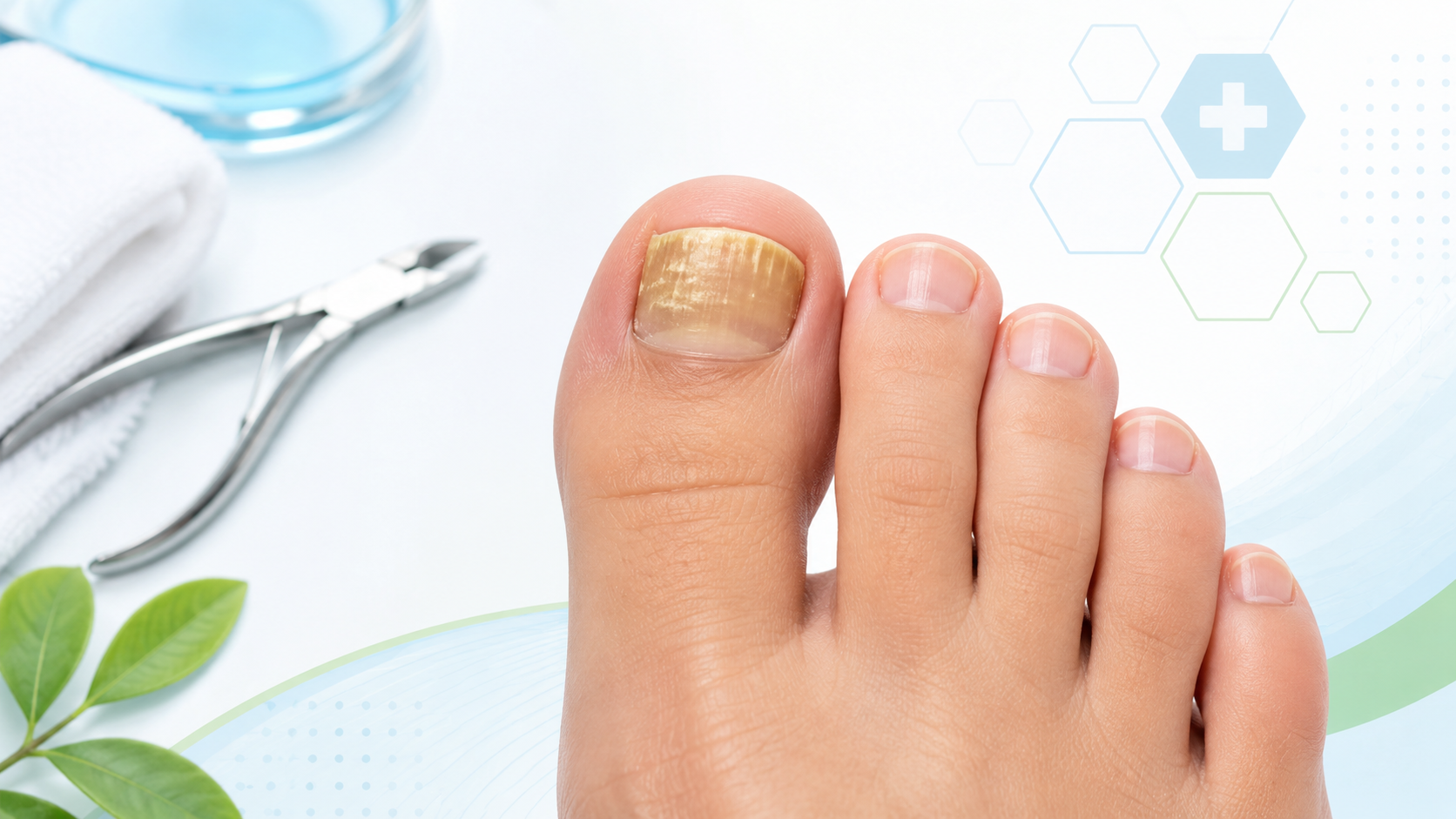
| Possible nail change | What you may notice |
|---|---|
| Discoloration | Yellow, white, brown or another change in nail color. |
| Thickening | The nail may become harder to trim or noticeably thicker than nearby nails. |
| Brittleness or crumbling | Edges may split, crack or break apart. |
| Debris beneath the nail | Material may build up under part of the nail plate. |
| Nail lifting | The nail may partially separate from the nail bed. |
| Shape changes | The nail may become distorted or irregular. |
These signs are not specific enough to diagnose onychomycosis by themselves. A healthcare professional can help distinguish fungal infection from other nail conditions.
Common Nail Fungus Symptoms
Possible symptoms and signs include:
- nail discoloration;
- thickened nail plate;
- brittle, cracked, split or crumbly nail edges;
- buildup under the nail;
- partial separation of the nail from the nail bed;
- changes in nail shape;
- pain or discomfort in some cases.
Not everyone experiences pain, and the appearance can vary depending on the organism involved, location and extent of infection.
What Causes Nail Fungus?
Onychomycosis is caused by fungi that infect the nail. Dermatophytes are an important cause, but yeasts and non-dermatophyte molds can also be involved.
Fungi tend to thrive in warm, moist environments. Infection can occur when fungi gain access around or beneath the nail. Exposure may happen through contact with infected skin or nails, shared grooming tools, towels, footwear, or damp communal environments.
Is nail fungus contagious?
Yes, fungal nail infections can spread. The American Academy of Dermatology notes that fungi may be picked up from another person's infected skin or nail, contaminated items, or warm, moist shared environments such as public showers and locker rooms.
Who Is More Likely to Get Nail Fungus?
Risk can be influenced by age, nail injury, repeated exposure to moisture, athlete's foot, footwear habits and certain health conditions. Individual risk is not determined by hygiene alone.
People with diabetes, circulation problems or immune-system concerns should be especially cautious about new foot or nail changes and should discuss appropriate care with a qualified healthcare professional.
How Is Nail Fungus Diagnosed?
A clinician may begin by examining the fingernails and toenails and asking about health history, exposure, symptoms and previous treatments.
Because several conditions can resemble onychomycosis, testing may be used to confirm fungal infection. The American Academy of Dermatology describes collecting material from the nail for microscopic examination, while evidence reviews also support confirmatory testing before systemic antifungal treatment.
What Else Can Look Like Nail Fungus?
Several nail problems can produce discoloration, thickening, crumbling or distortion. Examples include nail psoriasis and repeated trauma. Bacterial infections and other nail disorders can also change nail color or shape.
This is why an image or visual description on a website cannot confirm a diagnosis for an individual reader.
Nail Fungus Treatment
Treatment is individualized. A healthcare professional may consider how much of the nail is involved, how many nails are affected, the suspected organism, other medical conditions, current medications, pregnancy status and the risks and benefits of available therapies.
Oral antifungal medicines
Oral antifungal therapy is generally more effective than topical therapy for many cases of onychomycosis. Evidence reviews identify oral terbinafine as a common first-line option for many patients when it is appropriate and there are no relevant contraindications.
Oral antifungal medicines can have important interactions and safety considerations, so they require professional evaluation rather than self-treatment.
Topical antifungal medicines
Topical prescription therapies may be considered for some milder or more limited fungal nail infections. They typically require consistent application for a long period because nails grow slowly.
Examples discussed in clinical literature include ciclopirox, efinaconazole and tavaborole. The best choice depends on the individual situation.
Nail trimming, debridement and other approaches
Trimming or professional debridement may be used alongside antifungal treatment in selected cases. Evidence for newer approaches such as laser-based treatments is less established than for standard antifungal medications, and treatment claims should be evaluated carefully.
How Long Does Nail Fungus Take to Clear?
Nail fungus treatment is usually a slow process. Even after the infection is controlled, the damaged portion of the nail must grow out before the nail can look normal again.
Toenails grow more slowly than fingernails, so visible improvement may take months. The exact timeline varies by severity, treatment response, nail growth and other health factors.
Can Nail Fungus Come Back?
Yes. Recurrence can occur after an infection has cleared. The American Academy of Dermatology notes that people who have previously had nail fungus have an increased chance of another fungal nail infection.
That makes prevention, treatment of related fungal skin infections when present, and appropriate follow-up important parts of long-term management.
How to Help Prevent Nail Fungus
Prevention focuses on reducing prolonged moisture, limiting exposure to fungi and avoiding contaminated nail-care tools.
- Keep feet clean and dry.
- Change socks when they become damp or sweaty.
- Choose breathable footwear when practical.
- Allow shoes to dry between uses.
- Wear protective footwear in public showers, locker rooms and similar wet environments.
- Do not share nail clippers or other grooming tools.
- Keep nail-care tools clean.
- Address athlete's foot or other fungal skin infections with appropriate care.
When to See a Healthcare Professional
Consider professional evaluation when nail changes are persistent, spreading, painful, difficult to identify, or not improving with appropriate care.
Professional guidance is particularly important when you have diabetes, poor circulation, immune-system problems, significant pain, redness or swelling around the nail, or when oral antifungal medicine is being considered.
Frequently Asked Questions
Is nail fungus contagious?
Yes. Fungi that cause nail infections can spread through contact with infected skin or nails and through contaminated items or shared warm, moist environments.
Can nail fungus go away on its own?
Nail fungus often persists without effective treatment and may spread or worsen. A qualified healthcare professional can help confirm the diagnosis and discuss whether treatment is appropriate.
Can toenail fungus spread to other toes?
Yes. Fungal infection can involve more than one nail. Hygiene, keeping feet dry, avoiding shared tools and treating related fungal skin infections can be important parts of prevention.
Does a yellow toenail always mean fungus?
No. Fungus is one possible cause of nail discoloration, but trauma, psoriasis and other nail conditions can also change nail color or thickness.
Are oral treatments stronger than topical treatments?
Oral therapy is generally more effective for many cases of onychomycosis, while topical medicines may be appropriate for selected milder infections or when oral therapy is unsuitable. Treatment choice should be individualized.
How long until a toenail looks normal again?
Even after successful treatment, visible recovery can take months because the damaged nail must grow out. Toenails grow slowly, so appearance often improves gradually.